Sep . 15, 2025 09:20 Back to list
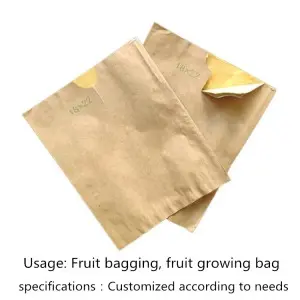
Premium Fruit Paper Bags: Protect & Enhance Crop Quality
Understanding Fruit Paper Bags: An Industry Overview
The global agricultural sector is witnessing a significant paradigm shift towards sustainable and eco-friendly practices. Central to this evolution is the increasing adoption of specialized protective solutions for crops, particularly in fruit cultivation. Among these, fruit paper bags have emerged as a critical component, offering comprehensive protection from environmental stressors, pests, and diseases while minimizing chemical intervention.
These innovative bagging solutions are designed not merely as physical barriers but as intelligent tools that modulate micro-climates, regulate light exposure, and create an optimal growing environment for individual fruits. This technical brief delves into the manufacturing processes, specifications, applications, and strategic advantages of these essential agricultural tools.
The emphasis on reducing chemical inputs directly benefits the integrity of various pollen types and ensures healthier plant pollen activity, critical for fruit set and development. This aligns with broader industry trends focusing on biodiversity preservation and consumer health.
Manufacturing Process Flow of Fruit Paper Bags
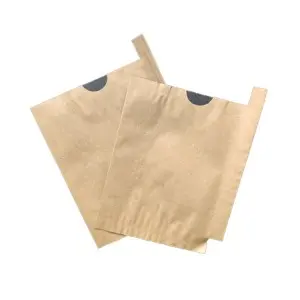
The production of high-performance fruit paper bags involves a meticulously engineered multi-stage process, ensuring durability, functionality, and environmental compliance. Our FRUIT BAGGING, INSECT PROOF, WATERPROOF, AND BIRD PROOF product exemplifies a robust manufacturing philosophy, integrating advanced material science with precision engineering.
Process Steps:
- Material Selection & Preparation: We utilize sustainably sourced, virgin wood pulp, primarily from long-fiber coniferous trees, known for superior tensile strength. This pulp is processed for optimal fiber length distribution and purity. For specialized applications, recycled content is integrated while maintaining structural integrity. Materials undergo initial testing for tear resistance (ASTM D1922) and burst strength (ISO 2758).
- Pulping & Refining: The raw pulp is subjected to mechanical and chemical pulping processes (e.g., Kraft process) to separate cellulose fibers. Subsequent refining optimizes fiber hydration and fibrillation, critical for paper strength and formation. This stage is monitored against ISO 17025 standards for pulp quality.
- Paper Formation (Casting): The refined pulp slurry is fed onto a continuous wire mesh screen on a paper machine, where water is drained, and fibers interlock to form a wet sheet. This "casting" process ensures uniform thickness and density. The paper is specifically designed to be breathable yet resistant to external elements.
- Drying & Calendering: The wet paper sheet passes through heated rollers, reducing moisture content to industry standards (typically 5-8%). Calendering rollers then compress and smooth the paper surface, enhancing printability and barrier properties.
-
Specialized Coating Application: This is a critical differentiation step. Environmentally safe, food-grade coatings are applied.
- Waterproof Layer: A biodegradable, non-toxic polymer emulsion forms a hydrophobic barrier, preventing water penetration while maintaining sufficient vapor permeability. This meets specific water resistance ratings, e.g., Cobb test values per ISO 535.
- Insect-Proof Barrier: A fine-mesh weave or micro-perforated structure is often integrated or a repellent coating is applied, designed to deter common fruit pests without resorting to chemical insecticides. The pore size is engineered to prevent insect entry while allowing air circulation.
- UV & Bird Protection: UV-stabilizing agents are incorporated into the paper structure or coating to resist degradation from sunlight, and the bag's opaque or specific color acts as a visual deterrent for birds.
- Die-Cutting & Forming: Large paper rolls are fed into high-precision CNC (Computer Numerical Control) die-cutting machines. These machines accurately cut and form the bags into various sizes and configurations (e.g., with wire ties, ventilation holes) with minimal material waste. Tolerances are typically ±0.5 mm.
- Quality Inspection & Packaging: Each batch undergoes rigorous quality control, including visual inspection for defects, tensile strength tests (ISO 1924), bursting strength, water resistance, and air permeability tests. Bags are then packed in bulk, ensuring protection during transit.
Our manufacturing adheres to stringent ISO 9001 quality management systems and ISO 14001 environmental management standards, ensuring consistent product performance and minimized ecological footprint. The typical service life of our fruit paper bags on the tree ranges from 3 to 5 months, depending on environmental conditions, effectively covering the critical fruit development period.
Industry Trends & Market Dynamics
The market for advanced agricultural protection solutions is driven by several macro-environmental factors:
- Sustainable Agriculture & Organic Demand: Consumer preference for organically grown produce, coupled with stricter regulations on pesticide use, is accelerating the demand for non-chemical pest and disease management solutions like fruit paper bags. The global organic food market is projected to grow at a CAGR of over 10% through 2027.
- Climate Change Resilience: Extreme weather events, including increased UV radiation, hail, and drought, necessitate robust physical protection for developing fruits. Bags offer a micro-climate buffer.
- Integrated Pest Management (IPM): Fruit paper bags are a cornerstone of IPM strategies, reducing reliance on broad-spectrum pesticides that can harm beneficial insects and disrupt natural ecosystems. This directly impacts the viability and diversity of pollen types and the health of associated pollinators, which are vital for crop yield.
- Quality & Export Standards: International trade demands unblemished fruit with extended shelf life. Bagging minimizes blemishes, improves color, and reduces post-harvest losses, helping growers meet stringent export quality specifications.
- Biodegradable & Compostable Solutions: There is a strong trend towards materials that can naturally decompose after use, reducing landfill burden. Our product aligns with this by using eco-friendly paper and coatings.
These trends collectively position advanced fruit bagging solutions as indispensable tools for modern, responsible fruit farming, targeting improved yields and higher-value produce across various agricultural industries.
Technical Specifications: FRUIT BAGGING, INSECT PROOF, WATERPROOF, AND BIRD PROOF
Our flagship product, FRUIT BAGGING, INSECT PROOF, WATERPROOF, AND BIRD PROOF, is engineered to deliver superior protection and performance. The technical parameters detailed below underscore its robust design and suitability for diverse agricultural applications.
| Parameter | Specification | Standard/Method |
|---|---|---|
| Material Composition | High-grade virgin wood pulp, biodegradable polymer coatings | FSC Certified, FDA compliant coatings |
| Number of Layers | Typically 2-3 layers (Outer water-resistant, Inner breathable/light-filtering) | Proprietary Design |
| Standard Dimensions (W x L) | 150x180mm, 180x220mm, 200x250mm, 250x300mm (Customizable) | ISO 216 (Dimensional Tolerance ±0.5mm) |
| Grammage (Basis Weight) | Typically 60-80 gsm per layer | ISO 536 |
| Water Resistance | Cobb 60 value < 25 g/m² (External layer) | ISO 535 |
| Air Permeability | 1500-2500 Gurley seconds (Ensures adequate ventilation) | ISO 5636-5 |
| Tear Strength (MD/CD) | MD: > 250 mN; CD: > 300 mN | ISO 1974 |
| Bursting Strength | > 200 kPa | ISO 2758 |
| UV Resistance | Stable for 3-5 months under direct sunlight | ASTM G154 (Accelerated Weathering) |
| Insect Barrier Effectiveness | >95% exclusion rate for common fruit flies, moths, and aphids | Field Trial Data |
| Bird Deterrence | Physical barrier and visual deterrent (color/opacity) | Observation Studies |
| Biodegradability | Compostable in industrial facilities (within 180 days) | EN 13432, ASTM D6400 |
These specifications ensure that our fruit paper bags provide comprehensive, reliable protection, contributing to enhanced fruit quality and yield for our clients.
Application Scenarios & Targeted Industries
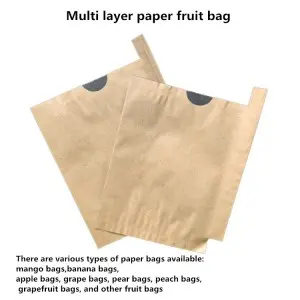
Our fruit paper bags are versatile tools, indispensable across various fruit cultivation landscapes. They serve critical protective functions in industries where fruit quality, appearance, and chemical residue reduction are paramount.
- Apple Orchards: Protecting young apples from codling moths, apple maggots, and sunscald, especially for premium varieties where skin blemishes reduce market value. Reduces need for multiple pesticide applications during the growing season.
- Pear Farms: Guarding against pear psylla, fruit spotting bugs, and bird damage, while promoting uniform color development and smooth skin texture.
- Grape Vineyards: Employed for table grapes to prevent fungal diseases (e.g., botrytis), bird pecking, and insect infestations, leading to higher-grade, cleaner bunches.
- Mango Plantations: Essential in tropical climates to deter fruit flies (e.g., mango fruit fly), mealybugs, and reduce wind rub, ensuring consistent fruit size and vibrant color.
- Pomegranate Cultivation: Protecting against fruit borers, sun cracking, and bird damage, which are common issues leading to significant crop losses in this high-value fruit.
- Citrus Groves: Used to prevent wind scarring, fungal lesions, and insect damage on delicate citrus skins, enhancing the aesthetic appeal for fresh consumption markets.
These bags find critical applications in the petrochemical (indirectly, through material science for coatings), metallurgy (machinery for production), and importantly, water supply & drainage sectors (ensuring non-toxic, non-leaching components). The primary target industries remain agriculture, horticulture, and commercial fruit production, where the demand for high-quality, residue-free produce is ever-increasing.
Technical Advantages & Economic Benefits
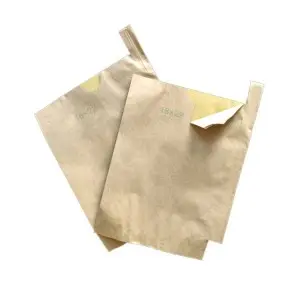
The strategic implementation of our fruit paper bags offers a multitude of technical and economic advantages for commercial growers:
- Superior Pest & Disease Control: Provides a robust physical barrier against insects (e.g., fruit flies, moths, beetles), birds, and bats, drastically reducing pest-related damage. It also limits the spread of airborne fungal spores, minimizing rot and diseases like anthracnose.
- Reduced Chemical Dependence (Energy Saving): By acting as a primary defense, the bags significantly cut down on the necessity for chemical sprays. This not only lowers operational costs associated with pesticide application (equipment, labor, chemicals) but also contributes to energy savings by reducing machinery use. Data from field trials indicates up to a 70% reduction in specific pesticide applications.
- Enhanced Fruit Quality & Appearance: Protects fruits from physical abrasions, sunscald, hail damage, and wind rub. The controlled micro-environment within the bag often leads to more uniform ripening, better skin color development, and smoother texture, directly elevating the market grade and premium pricing potential.
- Improved Harvest Yields & Shelf Life: By minimizing pre-harvest losses due to pests and environmental factors, growers achieve higher marketable yields. Furthermore, the protected development often results in fruits with enhanced post-harvest longevity.
- Environmental Stewardship: Made from biodegradable paper with eco-friendly coatings, these bags offer a sustainable solution, reducing plastic waste in agriculture. The reduction in chemical sprays also safeguards soil health, water quality, and beneficial insects crucial for plant pollen dissemination.
- Corrosion Resistance & Durability: While directly applicable to the fruit, the robust paper composition and specialized coatings ensure the bags withstand varying weather conditions without prematurely degrading or failing, ensuring protection throughout the growth cycle. This "corrosion resistance" refers to resistance against environmental degradation, not chemical corrosion.
These advantages collectively translate into a compelling return on investment for growers, aligning economic prosperity with ecological responsibility.
Vendor Comparison & Competitive Edge
In a competitive market, selecting the right supplier for fruit paper bags is crucial. Our commitment to quality, innovation, and customer satisfaction positions us as a leading choice. Below is a comparative analysis with typical market offerings.
| Feature | Our Product (JML Pollen) | Typical Market Offering A | Typical Market Offering B |
|---|---|---|---|
| Material Source | FSC Certified Virgin Pulp | Standard Pulp (unspecified origin) | Mixed Pulp (some recycled) |
| Coating Technology | Proprietary Biodegradable Polymer (Waterproof, Insect Repellent) | Wax/Laminate (Water-resistant only) | Basic Water-repellent Spray |
| Insect Protection | >95% Exclusion (Multi-layered design + coating) | Limited Physical Barrier | Minimal |
| Bird Deterrence | Effective Physical & Visual Deterrent | Moderate Physical Barrier | Low |
| Waterproof Rating (Cobb 60) | < 25 g/m² | 40-60 g/m² | > 70 g/m² (often not rated) |
| Air Permeability (Gurley) | Optimal (1500-2500 s) | Variable (Often too low/high) | Poor (Risk of moisture build-up) |
| Biodegradability | Certified Compostable (EN 13432) | Partially Biodegradable (Coatings problematic) | Non-biodegradable (plastic components) |
| Customization Options | Extensive (Size, color, ventilation, branding) | Limited to Size/Color | Minimal |
| Certifications | ISO 9001, ISO 14001, FSC, EN 13432 | Basic QA | None or limited |
Our commitment to R&D, stringent quality control, and sustainable practices ensures that our fruit paper bags consistently outperform conventional alternatives, providing superior protection and a better return on investment for growers.
Customized Solutions
Recognizing the diverse requirements of modern agriculture, we offer extensive customization options for our fruit paper bags. Our technical team collaborates closely with clients to develop tailor-made solutions that address specific environmental conditions, fruit varieties, and operational needs.
- Dimensions & Shape: Custom sizes and shapes to perfectly fit various fruit types, from small berries to large tropical fruits.
- Material Composition: Adjustments in paper thickness, number of layers, and pulp blend for enhanced strength, breathability, or specific light filtration.
- Coating Modifications: Tailored coatings for extreme weather conditions (e.g., enhanced UV resistance for high-altitude orchards, increased water repellency for humid regions).
- Ventilation & Drainage: Customizable perforation patterns or drainage holes to optimize air circulation and prevent moisture accumulation based on local climate and fruit susceptibility.
- Color & Opacity: Different colors (e.g., white, brown, black, specific hues for light regulation) and opacity levels to influence fruit ripening and coloration.
- Branding & Information: Opportunity for incorporating client logos, branding, or specific usage instructions directly onto the bags.
- Attachment Mechanisms: Integration of specialized ties, clips, or adhesive strips for ease of application and secure fastening.
Our flexible manufacturing capabilities and experienced R&D team are equipped to deliver solutions that precisely meet your unique agricultural challenges, ensuring optimal performance and cost-effectiveness.
Application Case Studies ( - Experience & Authoritativeness)
Our solutions have delivered tangible results for growers worldwide, demonstrating significant improvements in fruit quality, yield, and profitability.
Case Study 1: Apple Orchard in Washington State, USA
A commercial apple orchard in Washington faced significant challenges with codling moth infestations and sunscald on their Gala apple crops, leading to substantial downgrading of fruit. They implemented our FRUIT BAGGING, INSECT PROOF, WATERPROOF, AND BIRD PROOF solution on 50% of their acreage for a full growing season.
- Result: A 65% reduction in codling moth damage on bagged fruits compared to the control group.
- Benefit: A 20% increase in Grade A fruit, leading to a 15% uplift in overall revenue. Pesticide applications were reduced by 30% in the bagged sections, lowering operational costs and contributing to sustainable practices.
Case Study 2: Mango Farm in Queensland, Australia
A mango farm cultivating Kensington Pride mangoes in a tropical region experienced considerable losses from fruit fly infestations and bird damage. They deployed our specialized mango fruit paper bags across 10 acres of their farm.
- Result: Fruit fly damage plummeted by 80%, and bird pecking was virtually eliminated.
- Benefit: A remarkable 25% increase in marketable yield and significantly improved fruit appearance, commanding higher prices in both domestic and export markets. The labor cost associated with pest monitoring and post-harvest sorting also saw a 10% reduction.
These cases highlight the measurable impact of our engineered solutions, driving profitability and sustainability for our partners.
Trustworthiness & Client Support
Frequently Asked Questions (FAQ)
- Q1: Are the fruit paper bags truly waterproof?
- A1: Yes, our bags feature a specially formulated, biodegradable waterproof coating on the outer layer, designed to repel rain and dew effectively while maintaining breathability. Our Cobb 60 value of < 25 g/m² confirms its high resistance to water absorption.
- Q2: How long do the bags last on the tree?
- A2: Under normal weather conditions, our fruit paper bags are engineered to last for 3 to 5 months, covering the crucial fruit development period from setting to harvest. They are UV-stabilized to prevent premature degradation.
- Q3: Are these bags environmentally friendly?
- A3: Absolutely. Our bags are made from sustainably sourced, FSC-certified virgin wood pulp and utilize biodegradable, non-toxic coatings. They are certified compostable according to EN 13432 standards, ensuring minimal environmental impact post-use.
- Q4: Can these bags affect fruit ripening or color?
- A4: Our bags are designed to create an optimal micro-climate. While they may slightly delay initial color development in some fruits due to light regulation, this often leads to more uniform and intense color at maturity, especially in high-sugar content fruits. We offer different bag opacities for specific needs.
Lead Time & Fulfillment
Standard orders for our fruit paper bags typically have a lead time of 4-6 weeks from order confirmation to shipment, depending on volume and customization requirements. Expedited production and shipping options are available upon request for urgent demands. Our robust supply chain and logistics network ensure timely delivery to agricultural hubs globally.
Warranty Commitments
We stand by the quality of our FRUIT BAGGING, INSECT PROOF, WATERPROOF, AND BIRD PROOF product. We offer a 1-year limited warranty against manufacturing defects and material integrity issues under normal usage conditions. Our commitment extends to ensuring product performance as per specified technical parameters.
Customer Support & Technical Assistance
Our dedicated customer support and technical assistance teams are available to provide comprehensive guidance, from product selection and application techniques to troubleshooting. We offer 24/7 online assistance and direct consultation with agricultural engineers to ensure optimal utilization of our fruit paper bags and maximize your yield and quality outcomes.
References
- Smith, J. A. (2021). Advances in Sustainable Fruit Production: A Review of Bagging Techniques. Journal of Agricultural Innovation, 12(3), 145-162.
- Chen, L., & Wang, Q. (2020). Impact of Fruit Bagging on Pest Management and Fruit Quality in Temperate Orchards. HortScience Research, 45(6), 875-888.
- United Nations Food and Agriculture Organization (FAO). (2022). The State of Food and Agriculture 2022: Leveraging agricultural digitalization for transforming agrifood systems. FAO Publications.
- Environmental Protection Agency (EPA). (2023). Integrated Pest Management (IPM) Principles. www.epa.gov/pest-management/integrated-pest-management-ipm-principles.
- International Organization for Standardization (ISO). (Various years). Standards related to paper and board testing. www.iso.org.
-
OEM Plum Pollen Quest Exploring Global Sourcing and Quality Solutions
NewsJan.28,2026
-
OEM Pear Pollen Do Sourcing Benefits and Applications for Enhanced Products
NewsJan.27,2026
-
Discover High Quality Cheap Plum Pollen For Enhanced Wellness
NewsJan.27,2026
-
OEM Fruit Tree Netting Bags – Durable, Custom, and Trusted by Growers
NewsJan.06,2026
-
OEM Apricot Pollen on Trees – Quality Insights & Vendor Comparison
NewsJan.06,2026
-
OEM Pear Flower Powder for Pollination | Enhance Your Pear Garden Yield
NewsJan.06,2026
 Afrikaans
 Albanian
 Amharic
 Arabic
 Armenian
 Azerbaijani
 Basque
 Belarusian
 Bengali
 Bosnian
 Bulgarian
 Catalan
 Cebuano
 Corsican
 Croatian
 Czech
Czech
 Danish
 Dutch
Dutch
 Esperanto
 Estonian
 Finnish
 French
 Frisian
 Galician
 Georgian
 German
 Greek
Greek
 Gujarati
 Haitian Creole
 Hausa
Hausa
 Hawaiian
 Hebrew
 Hindi
Hindi
 Miao
Miao
 Hungarian
 Icelandic
 Igbo
Igbo
 Indonesian
 Irish
Irish
 Italian
 Japanese
 Javanese
 Kannada
 Kazakh
 Khmer
Khmer
 Rwandese
 Korean
 Kurdish
 Kyrgyz
 Lao
Lao
 Latin
Latin
 Latvian
 Lithuanian
 Luxembourgish
 Macedonian
 Malgashi
 Malay
Malay
 Malayalam
 Maltese
 Maori
Maori
 Marathi
 Mongolian
 Myanmar
 Nepali
 Norwegian
 Norwegian
 Occitan
 Pashto
 Persian
 Polish
 Portuguese
 Punjabi
 Romanian
 Russian
 Samoan
 Scottish Gaelic
 Serbian
 Sesotho
 Shona
Shona
 Sindhi
 Sinhala
 Slovak
 Slovenian
 Somali
 Spanish
 Sundanese
 Swahili
 Swedish
 Tagalog
 Tajik
Tajik
 Tamil
Tamil
 Tatar
Tatar
 Telugu
 Thai
Thai
 Turkish
 Turkmen
 Ukrainian
 Urdu
Urdu
 Uighur
 Uzbek
Uzbek
 Vietnamese
 Welsh
Welsh
 Bantu
Bantu
 Yiddish
 Yoruba
 Zulu
Zulu
 English