Mar . 03, 2026 18:35 Back to list
Optimizing OEM Sweet Cherry Pollen Size in Micrometers for Enhanced Product Efficacy
Understanding OEM Sweet Cherry Pollen Size in Micrometers
Sweet cherry pollen is a highly sought-after ingredient in various health and wellness products, known for its nutritional benefits and potential to support immune function. A critical aspect of quality control for manufacturers utilizing sweet cherry pollen – particularly when sourcing through JML Pollen for OEM supply – is understanding the pollen grain size distribution. This article will delve into the significance of pollen size, measured in micrometers, its impact on product efficacy, and the quality standards applied by JML Pollen. Precisely controlling the size of sweet cherry pollen allows for optimal bioavailability and consistent product performance.
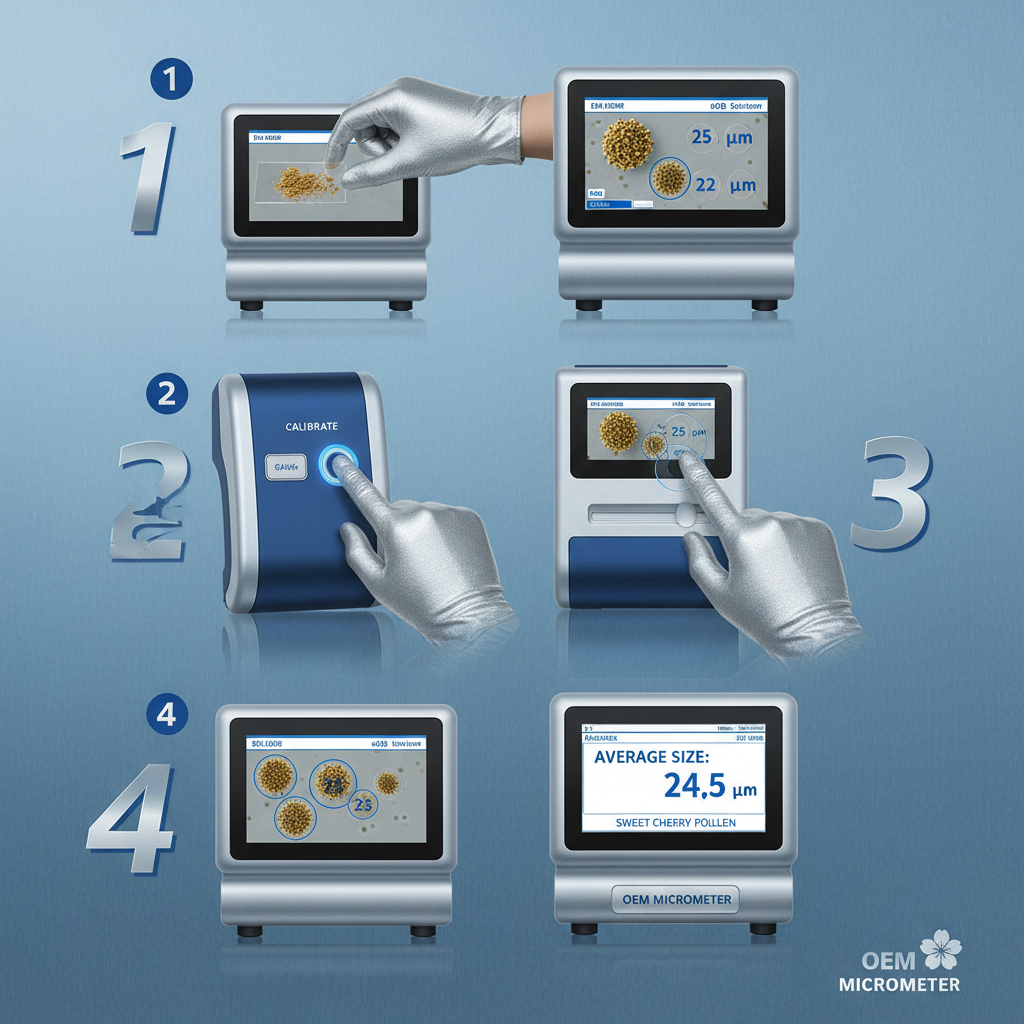
Why Pollen Size Matters: A Deep Dive
The size of sweet cherry pollen grains directly influences several crucial factors. Firstly, smaller pollen grains tend to be more easily absorbed by the body, enhancing bioavailability. Larger grains may be less efficiently utilized. Secondly, size impacts the pollen's flowability and dispersibility, important considerations for encapsulation and formulation into tablets, capsules, or liquid extracts. Thirdly, consistent particle size is critical for maintaining the homogeneity of a finished product. JML Pollen recognizes these factors and implements strict size control measures during the pollen processing and OEM supply stages.
Key Benefits of Optimized Pollen Size: Improved bioavailability, enhanced product formulation, consistent product quality, and increased consumer efficacy.
OEM Sweet Cherry Pollen Size: Defining the Optimal Range
The ideal size range for sweet cherry pollen utilized in OEM applications typically falls between 20 and 60 micrometers. This range provides a balance between efficient absorption and manageable processing characteristics. Pollen grains significantly larger than 60 micrometers may present formulation challenges, while those substantially smaller could be prone to clumping or loss during processing. JML Pollen's rigorous quality control ensures that the pollen supplied consistently meets these specifications.
Pollen Size and Bioavailability:
• Smaller pollen grains (20-30µm) - Higher absorption rate
• Medium pollen grains (30-50µm) - Optimal balance between absorption and processability
• Larger pollen grains (50-60µm) - May require specialized formulation techniques.
JML Pollen’s Quality Control: Size Analysis Techniques
JML Pollen employs advanced techniques to analyze and maintain strict control over pollen grain size. These include laser diffraction, microscopy, and sieve analysis. Laser diffraction provides rapid and accurate particle size distribution measurements. Microscopy allows for visual confirmation of pollen morphology and size. Sieve analysis separates pollen grains based on size, offering a simple and reliable method for quality assessment. These combined methods guarantee that the pollen supplied consistently meets the stringent requirements of our OEM partners.
Comparing Pollen Sources: Size Variations and Quality
Pollen size can vary depending on the geographical origin, cherry variety, and harvesting techniques. It's crucial to source pollen from a reputable supplier like JML Pollen, which consistently delivers pollen with a standardized size distribution. Variability in pollen size can lead to inconsistencies in product quality and efficacy. Our rigorous sourcing and processing protocols minimize these variations, ensuring a reliable and high-quality ingredient for your OEM needs.
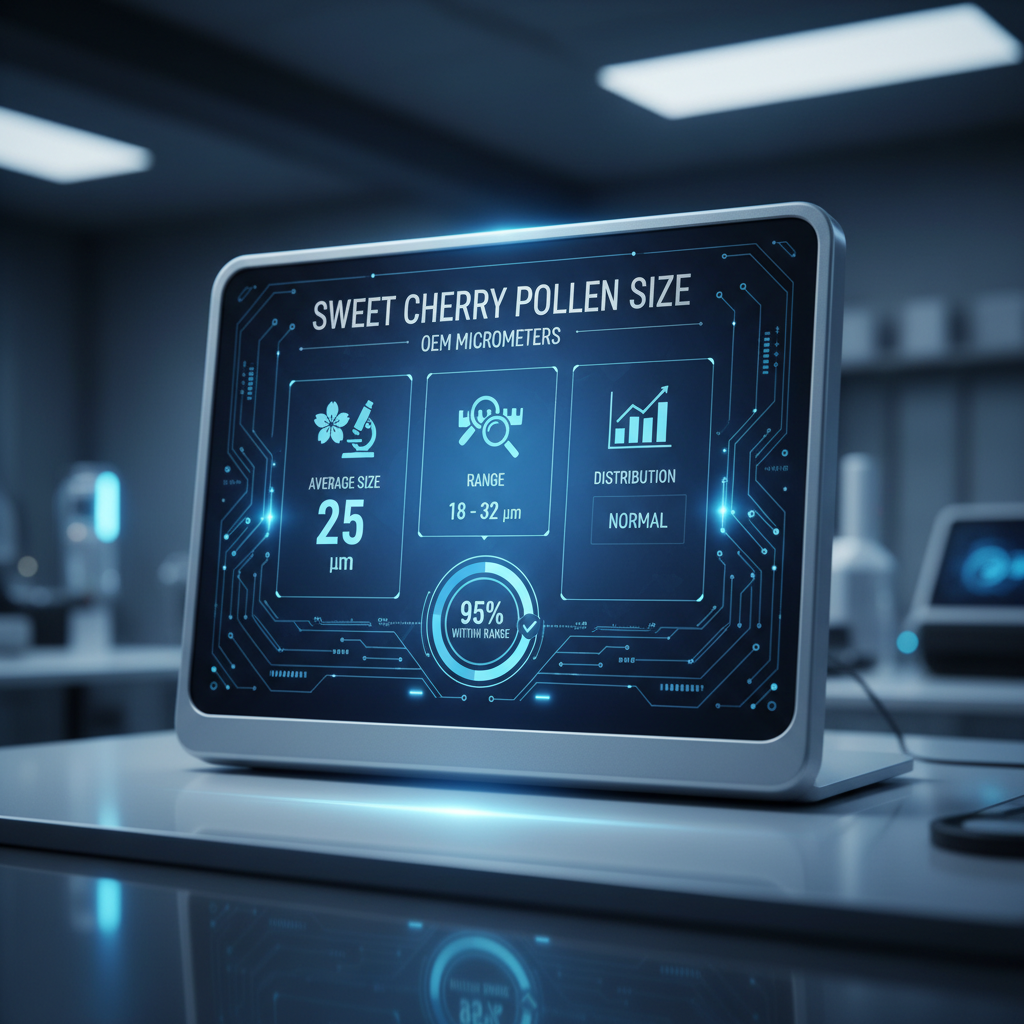
Technical Specifications: JML Pollen Sweet Cherry Pollen
At JML Pollen, we provide detailed technical specifications for our sweet cherry pollen, ensuring transparency and consistency for our OEM clients. Below is a summary of our key specifications:
Conclusion: Partnering with JML Pollen for Consistent Quality
Understanding the importance of sweet cherry pollen size in micrometers is crucial for successful OEM product development. JML Pollen provides consistently high-quality pollen with a controlled particle size distribution, supported by rigorous quality control measures. We are committed to delivering reliable ingredients to meet your specific needs, empowering you to create effective and innovative health and wellness products.
Frequently Asked Questions (FAQs)
What factors can affect the size of sweet cherry pollen grains?
Several factors can influence the size of sweet cherry pollen grains, including the specific cherry variety, growing conditions (temperature, rainfall, sunlight), pollination methods, harvesting time, and post-harvest processing techniques. Genetic factors inherent to the cherry tree also play a significant role. JML Pollen mitigates these variables through careful sourcing and standardized processing protocols, ensuring consistent particle size.
How does JML Pollen ensure consistent pollen size for OEM clients?
We employ a multi-stage quality control system that includes rigorous screening of raw materials, precise control over processing parameters (drying, milling, sieving), and regular particle size analysis using laser diffraction, microscopy, and sieve analysis. Our commitment to standardized procedures ensures that every batch of sweet cherry pollen meets our stringent specifications and your OEM requirements.
What is the significance of the D50 value in pollen size analysis?
The D50 value, also known as the median particle size, represents the particle size below which 50% of the pollen grains lie. It's a key metric used to characterize the particle size distribution. A narrow D50 value indicates a more uniform particle size, which is desirable for consistent product performance. JML Pollen provides D50 values for each batch of pollen, allowing for precise control over your formulations.
Can JML Pollen customize pollen size to meet specific OEM requirements?
Yes, we offer customized pollen processing services to meet specific particle size requirements. We can adjust our milling and sieving processes to achieve a tailored particle size distribution, ensuring optimal compatibility with your formulation and desired product characteristics. Please contact our team to discuss your specific needs.
-
High Quality oem pear flower powder suitable for pollination
NewsApr.16,2026
-
Premium Quality OEM Lots of Apple Pollen for Commercial Success
NewsApr.09,2026
-
Understanding OEM Pollen Count Cherry Hill for Effective Allergy Management
NewsApr.07,2026
-
Comprehensive Guide to OEM Grape Protection Bags for Optimal Vineyard Yields
NewsApr.04,2026
-
Optimizing Wellness with OEM Apricot Pollen Dosage A Comprehensive Guide
NewsMar.31,2026
-
OEM Fresh Fruit Bags Enhance Produce Quality and Shelf Life Solutions
NewsMar.28,2026
 Afrikaans
 Albanian
 Amharic
 Arabic
 Armenian
 Azerbaijani
 Basque
 Belarusian
 Bengali
 Bosnian
 Bulgarian
 Catalan
 Cebuano
 Corsican
 Croatian
 Czech
Czech
 Danish
 Dutch
Dutch
 Esperanto
 Estonian
 Finnish
 French
 Frisian
 Galician
 Georgian
 German
 Greek
Greek
 Gujarati
 Haitian Creole
 Hausa
Hausa
 Hawaiian
 Hebrew
 Hindi
Hindi
 Miao
Miao
 Hungarian
 Icelandic
 Igbo
Igbo
 Indonesian
 Irish
Irish
 Italian
 Japanese
 Javanese
 Kannada
 Kazakh
 Khmer
Khmer
 Rwandese
 Korean
 Kurdish
 Kyrgyz
 Lao
Lao
 Latin
Latin
 Latvian
 Lithuanian
 Luxembourgish
 Macedonian
 Malgashi
 Malay
Malay
 Malayalam
 Maltese
 Maori
Maori
 Marathi
 Mongolian
 Myanmar
 Nepali
 Norwegian
 Norwegian
 Occitan
 Pashto
 Persian
 Polish
 Portuguese
 Punjabi
 Romanian
 Russian
 Samoan
 Scottish Gaelic
 Serbian
 Sesotho
 Shona
Shona
 Sindhi
 Sinhala
 Slovak
 Slovenian
 Somali
 Spanish
 Sundanese
 Swahili
 Swedish
 Tagalog
 Tajik
Tajik
 Tamil
Tamil
 Tatar
Tatar
 Telugu
 Thai
Thai
 Turkish
 Turkmen
 Ukrainian
 Urdu
Urdu
 Uighur
 Uzbek
Uzbek
 Vietnamese
 Welsh
Welsh
 Bantu
Bantu
 Yiddish
 Yoruba
 Zulu
Zulu
 English