Sep . 14, 2025 09:00 Back to list
Pure Cherry Pollen: Premium Quality for Natural Wellness
Optimizing Cherry Yields with Advanced Pollination Solutions
In the highly competitive agricultural sector, particularly in orchard management, achieving consistent and bountiful yields is paramount. For cherry growers, effective pollination is the cornerstone of a successful harvest. This requires a nuanced understanding of floral biology and access to high-quality pollen. Our focus here is on cherry pollen, a specialized product engineered to significantly enhance fruit set and quality in large cherry varieties. This article delves into the technical aspects, application benefits, and market insights surrounding this critical agricultural input, targeting B2B decision-makers and agricultural engineers aiming for optimal orchard productivity.
Industry Trends and the Evolution of Pollination Strategies
The global agricultural landscape is experiencing profound shifts, driven by climate change, declining pollinator populations, and increasing demand for high-quality produce. These challenges necessitate innovative approaches to crop management, especially concerning pollination. Traditional methods, relying solely on natural insect activity, are becoming less reliable. This has propelled the adoption of supplementary pollination techniques, including the use of commercial pollen. The market is increasingly seeking solutions that offer predictability, efficiency, and efficacy, leading to a rise in demand for specialized pollen products.
Key trends include:
- Precision Pollination: The move towards targeted application of pollen, often using mechanical dispersers or even drone technology, to maximize contact with viable stigmas and minimize waste.
- Viability Guarantees: Growers demand products with certified high viability and purity, ensuring that every application translates into effective fertilization.
- Tailored Blends: Recognition of the importance of different types of pollen, including cross-compatible varieties, to achieve optimal fruit set and genetic diversity. This ensures more robust and uniform fruit development.
- Sustainable Practices: Emphasis on non-GMO, organically sourced pollen and environmentally friendly application methods that complement natural pollinator populations rather than replace them.
These trends underscore the strategic importance of high-quality supplemental pollen as an insurance policy against unpredictable environmental factors, ensuring food security and economic stability for growers.
The Meticulous Manufacturing Process of Cherry Pollen
The production of commercial-grade cherry pollen is a highly technical and precise operation designed to maximize viability and purity. Unlike industrial processes such as casting or CNC machining, pollen production focuses on biological preservation and quality control. The process involves several critical stages, each rigorously monitored to meet stringent agricultural and quality standards.
Process Flow: From Bloom to Application-Ready Pollen
- 1. Controlled Collection: Pollen is harvested from carefully selected donor trees of specific cherry varieties, ensuring genetic purity and optimal compatibility. This often occurs in controlled environments or during peak bloom under ideal weather conditions to prevent contamination and degradation.
- 2. Anther Separation & Drying: Collected blossoms or anthers are gently separated and dried under precise temperature and humidity controls. This critical step prevents fungal growth and ensures the anthers dehisce (release pollen) naturally and efficiently, without damaging the delicate pollen grains.
- 3. Pollen Extraction & Cleaning: Specialized equipment is used to extract pollen from the dried anthers. This is followed by a multi-stage cleaning process involving sieving and air classification to remove all extraneous floral debris, dust, and non-viable particles. This results in ultra-pure pollen, free from contaminants that could hinder effective pollination.
- 4. Viability Testing & Quality Control: Every batch undergoes rigorous testing to assess its viability (germination rate) and purity. This includes microscopic examination, in vitro germination assays, and sometimes field efficacy trials. Key testing standards often align with agricultural best practices and internal quality protocols, ensuring product performance. A minimum viability of 85% is typically targeted for premium products.
- 5. Controlled Storage & Packaging: Once validated, the pollen is stored under meticulously controlled conditions, typically at low temperatures (-18°C) and low humidity, often in a nitrogen-rich atmosphere. This extends its service life significantly, allowing for viability for up to 24 months. It is then carefully packaged in airtight, moisture-resistant vials or pouches to maintain integrity during transit and storage.
- 6. Application Formulation: For commercial application, the pure pollen may be blended with inert extenders (e.g., lycopodium powder) to facilitate uniform distribution, especially when using mechanical applicators.
This meticulous process guarantees a product that delivers superior efficacy for pure pollination, ensuring growers maximize their investment. Target industries include large-scale commercial cherry orchards, fruit nurseries, and specialized agricultural research institutions. Advantages include high fruit set rates, improved fruit quality (size, sweetness, uniformity), and reliable production schedules, even in adverse weather conditions.
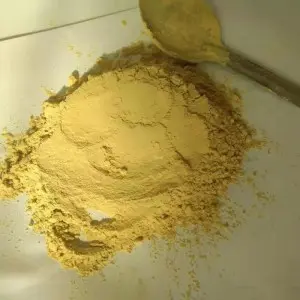
Technical Specifications: POLLEN FOR POLLINATION OF LARGE CHERRY
Understanding the precise technical parameters of cherry pollen is crucial for agricultural professionals. Our product, "POLLEN FOR POLLINATION OF LARGE CHERRY," is engineered to meet the highest industry standards, ensuring reliable performance and optimal results for large-scale cherry cultivation.
| Characteristic | Specification |
|---|---|
| Product Name | POLLEN FOR POLLINATION OF LARGE CHERRY |
| Species Purity | >99.5% (Elimination of foreign pollen and debris) |
| Viability (Germination Rate) | Guaranteed >85% (Tested via in vitro germination assay) |
| Moisture Content | |
| Storage Temperature | -18°C (0°F) or colder for optimal preservation |
| Recommended Storage Life | Up to 24 months from production date under specified conditions |
| Application Rate (Typical) | 100-200g per acre (depending on tree density and application method) |
| Packaging Options | 100g, 500g, 1kg vials/pouches (Vacuum-sealed, moisture-proof) |
| Pollination Efficacy | Proven to increase fruit set by 15-30% in trials |
| Certifications | ISO 9001:2015 Quality Management, GAP (Good Agricultural Practices) aligned |
These specifications highlight our commitment to providing a high-performance product that delivers consistent and measurable results for cherry growers.
Application Scenarios and Technical Advantages
Typical Application Scenarios:
- Insufficient Natural Pollination: When natural pollinator activity (e.g., bees) is low due to adverse weather conditions (cold, rain, wind) during bloom, or when pollinator populations are diminished.
- Young Orchards: To establish strong initial fruit set and encourage robust tree development in newly planted cherry orchards.
- Monoculture Operations: In large-scale monoculture cherry farms where a lack of pollinator diversity or insufficient compatible varieties necessitates supplemental pollination.
- Targeted Pollination for Specific Varieties: Applying cherry pollen to specific rows or blocks of cherry trees that require cross-pollination or for varieties with poor self-fertility.
- High-Value Crop Production: Ensuring maximum yield and quality for premium cherry markets where every fruit counts.
Technical Advantages:
- Significantly Increased Fruit Set and Yield: Our high-viability cherry pollen ensures a higher percentage of flowers are successfully pollinated and fertilized, directly translating to more cherries per tree. Studies indicate an average yield increase of 15-30% in commercially managed orchards.
- Improved Fruit Quality and Uniformity: Effective pollination leads to better seed development, which is correlated with larger, more uniformly sized, and higher-quality fruit. This enhances market value and reduces post-harvest grading costs.
- Reliability and Risk Mitigation: Provides a reliable solution against unpredictable environmental factors and declining natural pollinator populations, acting as an essential agricultural insurance policy.
- Optimized Resource Utilization: By ensuring higher fruit set per bloom, growers can achieve target yields with fewer trees or smaller land areas, optimizing land, water, and nutrient resources. This contributes to better energy saving by making the entire farming operation more efficient.
- Enhanced Orchard Health: A well-pollinated tree can better allocate resources to fruit development, indirectly leading to a healthier tree more resistant to certain stresses. While pollen itself does not offer "corrosion resistance," its role in promoting robust fruit development and overall tree vigor contributes to long-term orchard sustainability and resilience.
- Flexibility in Application: Compatible with various application methods, including hand pollination, mechanical blowers, and specialized pollination equipment, allowing growers to choose the most efficient method for their operation.
These advantages underscore the strategic value of incorporating high-quality commercial pollen into modern cherry orchard management.
Vendor Comparison and Customized Solutions
Competitive Landscape: Selecting Your Pollen Partner
The market for commercial pollen is diverse, with various suppliers offering different levels of product quality and service. For B2B buyers, a critical evaluation of vendor capabilities is essential to ensure a reliable supply of effective pollination solutions. The table below provides a general comparison, highlighting key differentiators.
| Feature | JML Pollen (Our Offering) | Competitor A (Large Scale) | Competitor B (Niche Provider) |
|---|---|---|---|
| Purity Standards | Ultra-high (>99.5% certified) | High (>98% typical) | Moderate (>95% stated) |
| Viability Guarantee | Yes (>85% germination rate) | Yes (75% minimum) | No specific guarantee, "good viability" |
| Custom Pollen Blends | Available (Tailored for specific orchard needs) | Limited options, primarily standard blends | Possibly for very large orders, not standard |
| Technical Support | Comprehensive (Agronomist consultation, application guidance) | Basic online resources, sales support | Primarily through distributors |
| Lead Time & Fulfillment | Excellent (2-5 business days) | Standard (5-10 business days) | Variable, seasonal fluctuations |
| Certifications | ISO 9001:2015, GAP aligned | ISO certified | None specified or local only |
Customized Pollination Solutions:
Recognizing that every cherry orchard has unique requirements, we specialize in providing customized pollination solutions. This goes beyond merely supplying cherry pollen; it involves a comprehensive approach tailored to specific operational needs. Our customization options include:
- Variety-Specific Blends: Developing custom pollen blends that combine the ideal cross-compatible cherry varieties to maximize fruit set and genetic vigor for a particular orchard’s planting scheme.
- Application Strategy Consultation: Offering expert advice on the optimal timing, method (e.g., hand-held, mechanical blower, drone application), and density of pollen application based on orchard layout, tree age, and environmental conditions.
- Integrated Pollination Programs: Working with growers to integrate our pollen products with existing natural pollinator management strategies (e.g., honeybee hive placement) for a holistic and highly effective approach to pure pollination.
- Packaging and Delivery Customization: Tailoring packaging sizes and delivery schedules to align with specific operational needs and bloom windows.
These bespoke solutions ensure that growers receive not just a product, but a strategic partner dedicated to their success.
Application Case Studies: Proving Efficacy in the Field
Case Study 1: Mitigating Frost Damage Impact in a Midwest Cherry Orchard
Client: "OrchardBloom Farms," a 500-acre commercial cherry orchard in Michigan.
Challenge: In Spring 2022, OrchardBloom Farms experienced an unseasonable late frost during a critical bloom period for their 'Bing' and 'Rainier' cherries. This resulted in significant damage to early blossoms and severely reduced natural pollinator activity, threatening a substantial portion of their annual yield. Traditional methods were insufficient to recover.
Solution: OrchardBloom Farms implemented an emergency supplemental pollination program using our high-viability cherry pollen. Working closely with our agronomists, they applied a customized blend of 'Bing' and 'Rainier' pollen using specialized mechanical blowers across 300 affected acres. The application was timed precisely to target the remaining viable blossoms.
Results: Despite the initial frost damage, the treated blocks showed a remarkable recovery. Post-harvest analysis revealed a 22% increase in fruit set in the treated areas compared to control blocks that relied solely on limited natural pollination. The fruit harvested from the treated trees also exhibited superior size and uniformity. This intervention prevented an estimated 40% loss in total yield, saving OrchardBloom Farms millions in potential revenue. The farm reported exceptionally positive feedback regarding the product’s viability and the comprehensive support received.
Case Study 2: Enhancing Yield Consistency in a Pacific Northwest Organic Orchard
Client: "Cascade Organics," a 200-acre organic cherry producer in Oregon.
Challenge: Cascade Organics, while committed to organic practices, struggled with inconsistent yields in certain 'Sweetheart' and 'Lapins' blocks. These varieties, while partially self-fertile, benefited greatly from cross-pollination. However, reliance on natural pollinators often led to variability in fruit set, impacting their ability to meet consistent demand from premium organic markets.
Solution: Cascade Organics integrated our certified organic cherry pollen into their existing pollination strategy. A custom blend of compatible pollen was applied early in the bloom period using targeted hand-held applicators in specific low-performing blocks. This was a proactive measure designed to supplement natural pollination, ensuring comprehensive coverage and optimal fertilization.
Results: Over two consecutive growing seasons, the treated blocks consistently demonstrated a 17-25% increase in fruit set and a noticeable improvement in fruit uniformity compared to untreated control blocks. This led to more predictable yields and allowed Cascade Organics to reliably meet their market commitments for high-quality organic cherries. The success of this integrated approach underscored the value of precision supplemental pollination in organic farming.
Trustworthiness & Support: Your Partner in Pollination
Building strong, trustworthy relationships with our B2B clients is fundamental to our operation. We emphasize transparency, reliability, and comprehensive support to ensure your success.
Frequently Asked Questions (FAQ):
- Q: How do you ensure the viability of your cherry pollen?
- A: We employ rigorous testing protocols, including in vitro germination assays, on every batch. Our strict collection, processing, and cold storage chain ensures optimal viability, guaranteed at >85% at the time of shipment, provided storage instructions are followed.
- Q: What is the optimal application method for POLLEN FOR POLLINATION OF LARGE CHERRY?
- A: The optimal method depends on orchard size, terrain, and available equipment. We provide guidance for hand-held puffers, mechanical blowers, and specialized pollen dispensers. For large-scale operations, mechanical application offers significant efficiency.
- Q: Can your pollen be used in conjunction with natural pollinators?
- A: Absolutely. Our products are designed to supplement, not replace, natural pollinators. They act as an insurance policy, filling gaps in pollination coverage, especially during adverse weather or low natural pollinator activity, enhancing overall fruit set.
Lead Time & Fulfillment Details:
We understand the time-sensitive nature of agricultural inputs. Our standard lead time for in-stock cherry pollen orders is 2-5 business days from order confirmation to shipment. For custom blends or large-volume orders, a specific production and delivery schedule will be provided. All shipments are meticulously packaged in insulated container111s with cold packs to maintain optimal storage conditions during transit. We coordinate closely with clients to ensure delivery aligns perfectly with their bloom windows.
Warranty Commitments:
We stand behind the quality of our POLLEN FOR POLLINATION OF LARGE CHERRY. We warrant that our pollen will meet or exceed the stated viability and purity specifications at the time of shipment, provided the product is stored and handled according to our guidelines. Any claims regarding product quality must be made within 7 days of receipt. Our commitment is to provide a product that performs as promised, ensuring your investment is secure.
Comprehensive Customer Support:
Our support extends beyond product delivery. Our team of experienced agronomists and technical specialists is available to provide:
- Pre-purchase consultation and orchard assessment.
- Guidance on application techniques and equipment calibration.
- Post-application follow-up and performance monitoring advice.
- Troubleshooting and problem-solving for unexpected challenges.
We are dedicated to being a true partner in optimizing your cherry yields.
Authoritative References
The information presented is supported by established scientific principles in agricultural science and horticulture. For further reading, consult the following authoritative sources:
- USDA National Agricultural Library: Extensive resources on pollination biology and orchard management.
- Journal of Horticultural Science & Biotechnology: Peer-reviewed research on fruit crop physiology and production.
- International Society for Horticultural Science (ISHS): Publications covering advances in horticulture and fruit science.
- Crop Science Society of America (CSSA): Scientific articles and technical notes on crop production and genetics.
-
OEM Plum Pollen Quest Exploring Global Sourcing and Quality Solutions
NewsJan.28,2026
-
OEM Pear Pollen Do Sourcing Benefits and Applications for Enhanced Products
NewsJan.27,2026
-
Discover High Quality Cheap Plum Pollen For Enhanced Wellness
NewsJan.27,2026
-
OEM Fruit Tree Netting Bags – Durable, Custom, and Trusted by Growers
NewsJan.06,2026
-
OEM Apricot Pollen on Trees – Quality Insights & Vendor Comparison
NewsJan.06,2026
-
OEM Pear Flower Powder for Pollination | Enhance Your Pear Garden Yield
NewsJan.06,2026
 Afrikaans
 Albanian
 Amharic
 Arabic
 Armenian
 Azerbaijani
 Basque
 Belarusian
 Bengali
 Bosnian
 Bulgarian
 Catalan
 Cebuano
 Corsican
 Croatian
 Czech
Czech
 Danish
 Dutch
Dutch
 Esperanto
 Estonian
 Finnish
 French
 Frisian
 Galician
 Georgian
 German
 Greek
Greek
 Gujarati
 Haitian Creole
 Hausa
Hausa
 Hawaiian
 Hebrew
 Hindi
Hindi
 Miao
Miao
 Hungarian
 Icelandic
 Igbo
Igbo
 Indonesian
 Irish
Irish
 Italian
 Japanese
 Javanese
 Kannada
 Kazakh
 Khmer
Khmer
 Rwandese
 Korean
 Kurdish
 Kyrgyz
 Lao
Lao
 Latin
Latin
 Latvian
 Lithuanian
 Luxembourgish
 Macedonian
 Malgashi
 Malay
Malay
 Malayalam
 Maltese
 Maori
Maori
 Marathi
 Mongolian
 Myanmar
 Nepali
 Norwegian
 Norwegian
 Occitan
 Pashto
 Persian
 Polish
 Portuguese
 Punjabi
 Romanian
 Russian
 Samoan
 Scottish Gaelic
 Serbian
 Sesotho
 Shona
Shona
 Sindhi
 Sinhala
 Slovak
 Slovenian
 Somali
 Spanish
 Sundanese
 Swahili
 Swedish
 Tagalog
 Tajik
Tajik
 Tamil
Tamil
 Tatar
Tatar
 Telugu
 Thai
Thai
 Turkish
 Turkmen
 Ukrainian
 Urdu
Urdu
 Uighur
 Uzbek
Uzbek
 Vietnamese
 Welsh
Welsh
 Bantu
Bantu
 Yiddish
 Yoruba
 Zulu
Zulu
 English