Production equipment for fruit bagging is becoming increasingly vital in modern agriculture. It’s no longer just about protecting fruit from pests and the elements; it’s about ensuring consistent quality, reducing labor costs, and meeting the ever-growing demands of a global market. We're seeing a shift from manual methods – which are slow, inconsistent, and rely heavily on available labor – to automated and semi-automated systems. The key here is scalability; a farmer with a small orchard has very different needs than a large-scale producer supplying major retailers. And that’s where the right equipment makes all the difference.
This isn't some abstract concept either. I’ve spent years on orchards across the globe, seeing firsthand the impact good (and bad) equipment has on a harvest. The old ways are simply unsustainable when you’re talking about consistently delivering premium fruit. We're talking about reducing losses due to bird damage, insect infestation, and sun scorch. It's also about improving the overall appearance of the fruit, which directly impacts its market value.
The demand for high-quality, visually appealing fruit is rising, especially in export markets. Production equipment for fruit bagging allows growers to meet these standards, maintain a competitive edge, and improve their bottom line. It's a direct response to consumer preferences and evolving industry standards.
The Importance of Production Equipment for Fruit Bagging
Look, I’ve seen orchards lose entire crops to unexpected weather events and pest infestations. The ability to proactively protect your fruit, and to do it efficiently, is critical. Production equipment for fruit bagging isn’t just an expense; it’s an investment in yield security. It’s about mitigating risk and ensuring a predictable return. And the right equipment reduces the reliance on seasonal labor, which is becoming harder and harder to find.
The global fruit market is incredibly competitive. Consumers want perfect-looking fruit, and retailers demand consistency. Production equipment for fruit bagging helps growers meet those demands, opening up access to premium markets and better pricing. It also contributes to reducing food waste – damaged or imperfect fruit often ends up discarded.
Defining Production Equipment for Fruit Bagging
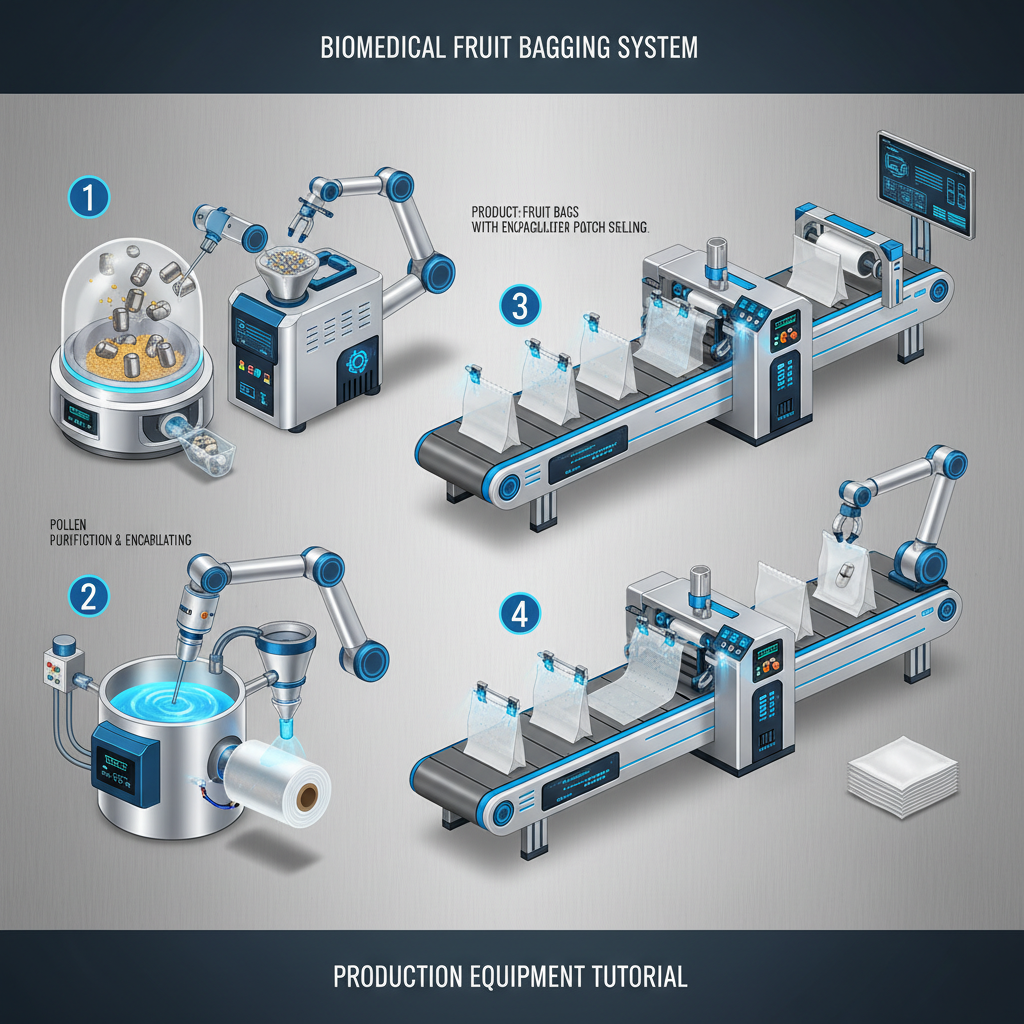
Essentially, production equipment for fruit bagging encompasses all the tools and machinery used to enclose individual fruits in protective bags. This can range from simple handheld applicators for smaller operations to fully automated systems capable of bagging thousands of fruits per hour. It includes the bag dispensers, the application mechanisms, and often, supporting structures for handling and transporting the bagged fruit. It's not a one-size-fits-all situation; the choice depends heavily on the crop, the orchard layout, and the scale of the operation.
This equipment ties directly into the push for sustainable agriculture. By reducing pesticide use through physical protection, it contributes to healthier ecosystems and safer produce. It's a tangible example of how technology can be used to address both economic and environmental concerns.
Increasingly, we’re seeing “smart” equipment integrated with data analytics. This allows growers to monitor bagging efficiency, track fruit development, and make informed decisions about crop management. It’s a move towards precision agriculture and optimizing every stage of the production process.
Key Factors in Selecting Equipment
Durability is paramount. These machines are going to be exposed to harsh conditions – sun, rain, dust, and constant use. You need equipment built to withstand the rigors of a working orchard. I've seen too many systems break down mid-season, causing costly delays and lost yield. Think robust materials, reliable components, and easy access for maintenance.
Scalability is also crucial. Can the equipment handle your current volume, and can it be easily expanded as your orchard grows? Investing in a system that's too small will only lead to bottlenecks and limitations down the road. Conversely, overinvesting in a massive automated system for a small orchard is simply impractical.
Cost efficiency isn’t just about the initial purchase price. Consider the long-term operating costs: maintenance, bag replacement, energy consumption, and labor requirements. A slightly more expensive machine upfront that requires less maintenance and reduces labor costs may be the more economical choice in the long run.
Global Applications and Use Cases
Production equipment for fruit bagging is widespread across Asia, particularly in countries like Japan, Korea, and China, where premium fruit production is a major industry. These regions have a long history of using bagging to achieve specific color and size characteristics. We’re also seeing increased adoption in Europe and North America, especially for high-value crops like apples, pears, and peaches.
In remote, mountainous regions where access to labor is limited, automated bagging systems offer a viable solution for maintaining fruit production. I worked on a project in the Andes Mountains where manual bagging was simply not feasible due to the steep terrain and lack of available workers. The equipment allowed them to continue producing high-quality apples for export.
Beyond commercial orchards, this equipment is also being used in research and development. Universities and agricultural institutions are using it to study the effects of different bagging materials and techniques on fruit quality and yield.
Production Equipment for Fruit Bagging Performance
Advantages and Long-Term Value
The most obvious benefit is reduced fruit damage and increased yield. But it goes beyond that. Improved fruit quality leads to higher market prices and increased profitability. And by reducing reliance on pesticides, you’re building a more sustainable and environmentally responsible operation. It’s a win-win.
From a labor perspective, automation reduces the physical strain on workers and increases efficiency. It’s about creating a safer and more rewarding work environment. And let’s be honest, finding good labor is getting harder and harder. This equipment helps address that challenge.
Future Trends and Innovations
We’re going to see more integration of AI and machine learning. Imagine a system that can automatically adjust bagging pressure based on fruit size and variety, or detect and flag potential defects. That’s the direction we’re heading.
Biodegradable bagging materials are also gaining traction. Consumers are increasingly demanding sustainable packaging solutions, and biodegradable bags offer a more environmentally friendly alternative to traditional plastic bags. We’re also exploring the use of drone technology for aerial inspection of bagged fruit, allowing for early detection of problems.
Challenges and Solutions
One of the biggest challenges is the initial investment cost. Automated systems can be expensive, which can be a barrier for smaller growers. However, financing options and leasing programs are becoming more readily available.
Another challenge is adapting the equipment to different orchard layouts and fruit varieties. This requires careful planning and customization. Working with experienced equipment suppliers who understand your specific needs is crucial.
Finally, maintaining the equipment and ensuring proper bag application requires skilled technicians. Ongoing training and support are essential to maximize the benefits of the investment.
Summary of Challenges and Solutions for Production Equipment for Fruit Bagging
| Challenge |
Impact on Growers |
Proposed Solution |
Implementation Difficulty (1-10) |
| High Initial Investment |
Limits access for smaller orchards |
Financing options & leasing programs |
6 |
| Equipment Customization |
Incompatibility with various orchard layouts |
Collaboration with experienced suppliers |
7 |
| Maintenance Complexity |
Unexpected downtime & repair costs |
Regular preventative maintenance schedules |
5 |
| Skilled Technician Shortage |
Difficulties in operating and repairing the equipment |
Comprehensive training programs & remote support |
8 |
| Bag Material Consistency |
Impacts bagging speed and fruit protection |
Partnering with reputable bag suppliers |
4 |
| Data Integration Challenges |
Difficulty in analyzing performance metrics |
Implementing data analytics dashboards and reporting tools |
6 |
FAQS
The return on investment varies, but generally, growers see a payback period of 2-5 years. This is based on increased yields, reduced labor costs, and higher fruit quality. The specific ROI depends on the type of fruit, the scale of the operation, and the efficiency of the equipment. A thorough cost-benefit analysis is crucial before making an investment.
Consider the size of your orchard, the type of fruit you grow, your budget, and the availability of labor. For smaller orchards, a manual or semi-automated system may be sufficient. Larger orchards will likely benefit from a fully automated system. Talk to different suppliers and get quotes, and don’t hesitate to ask for demonstrations.
Regular maintenance is essential to keep the equipment running smoothly. This includes cleaning, lubricating moving parts, inspecting for wear and tear, and replacing worn components. Many suppliers offer maintenance contracts and training programs for your staff. Preventative maintenance is key to avoiding costly downtime.
Yes, biodegradable bagging materials are becoming increasingly available. These are typically made from paper, cellulose, or other plant-based materials. While they may be more expensive than traditional plastic bags, they offer a more sustainable option and are often preferred by environmentally conscious consumers. Be sure to check the certifications and composting requirements.
Reputable suppliers will offer comprehensive training for your staff on how to operate and maintain the equipment. They should also provide ongoing technical support, troubleshooting assistance, and access to spare parts. Don’t hesitate to ask about their support services before making a purchase.
Automated or semi-automated equipment significantly reduces labor requirements for bagging fruit, leading to lower labor costs. While there may be initial training needs, the overall reduction in manual labor can be substantial, especially during peak harvest season. This allows you to reallocate labor to other critical tasks.
Conclusion
In conclusion, production equipment for fruit bagging represents a crucial investment for modern growers. It's no longer simply about protecting fruit; it’s about improving quality, increasing efficiency, and ensuring long-term sustainability. From reducing labor costs to mitigating the impact of pests and weather, the benefits are clear. It’s an investment in the future of your orchard.
Looking ahead, the integration of AI, automation, and sustainable materials will continue to drive innovation in this field. Growers who embrace these technologies will be well-positioned to succeed in a increasingly competitive market. If you're serious about producing high-quality fruit and maximizing your profitability, exploring production equipment for fruit bagging is a step you can't afford to overlook.



 English
  Afrikaans
  Albanian
  Amharic
  Arabic
  Armenian
  Azerbaijani
  Basque
  Belarusian
  Bengali
  Bosnian
  Bulgarian
  Catalan
  Cebuano
  Corsican
  Croatian
  Czech
Czech  Danish
  Dutch
Dutch  Esperanto
  Estonian
  Finnish
  French
  Frisian
  Galician
  Georgian
  German
  Greek
Greek  Gujarati
  Haitian Creole
  Hausa
Hausa  Hawaiian
  Hebrew
  Hindi
Hindi  Miao
Miao  Hungarian
  Icelandic
  Igbo
Igbo  Indonesian
  Irish
Irish  Italian
  Japanese
  Javanese
  Kannada
  Kazakh
  Khmer
Khmer  Rwandese
  Korean
  Kurdish
  Kyrgyz
  Lao
Lao  Latin
Latin  Latvian
  Lithuanian
  Luxembourgish
  Macedonian
  Malgashi
  Malay
Malay  Malayalam
  Maltese
  Maori
Maori  Marathi
  Mongolian
  Myanmar
  Nepali
  Norwegian
  Norwegian
  Occitan
  Pashto
  Persian
  Polish
  Portuguese
  Punjabi
  Romanian
  Russian
  Samoan
  Scottish Gaelic
  Serbian
  Sesotho
  Shona
Shona  Sindhi
  Sinhala
  Slovak
  Slovenian
  Somali
  Spanish
  Sundanese
  Swahili
  Swedish
  Tagalog
  Tajik
Tajik  Tamil
Tamil  Tatar
Tatar  Telugu
  Thai
Thai  Turkish
  Turkmen
  Ukrainian
  Urdu
Urdu  Uighur
  Uzbek
Uzbek  Vietnamese
  Welsh
Welsh  Bantu
Bantu  Yiddish
  Yoruba
  Zulu
Zulu