Many orchard managers assume that natural pollination is sufficient for apple production, yet a growing number of commercial growers are discovering that strategic intervention can dramatically alter harvest outcomes. The gap between "acceptable" yields and "optimal" commercial quality often lies in the precision of the pollination process.
The agricultural sector is shifting toward a more data-driven approach to fruit setting, where the focus is no longer just on the presence of bees, but on the genetic compatibility and viability of the pollen used. This evolution is particularly critical for self-incompatible varieties that struggle to set fruit without high-affinity cross-pollination.
By understanding how ce certification pollination can bring unexpected benefits to apples, growers can move beyond unpredictable natural cycles to a system of guaranteed fruit set and improved commercial grade.

The Mechanics of Self-Incompatibility in Apples

Most commercial apple varieties are self-incompatible, meaning they cannot produce fruit using their own pollen. This biological barrier requires a compatible pollinizer—usually a different apple variety—to be present in the orchard or introduced artificially.
When the genetic match between the pollen donor and the recipient is poor, the fruit set rate drops, leading to uneven crop loads and smaller, less marketable fruit. This is where the introduction of high-affinity pollen becomes a decisive factor in profitability.
Technical Parameters for High-Viability Pollen
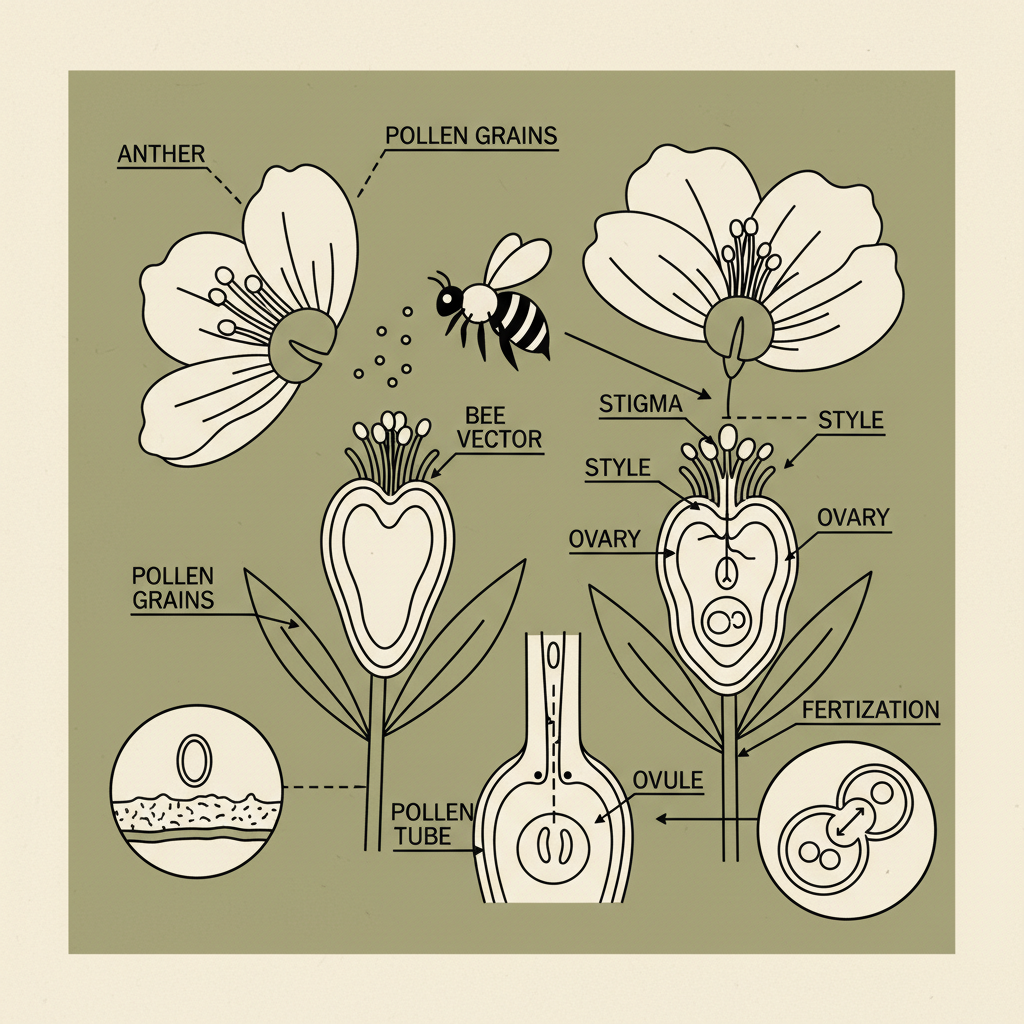
The effectiveness of artificial pollination depends entirely on the biological activity of the pollen. Pollen is a living organism; its ability to germinate on the stigma and extend a pollen tube into the ovary is highly sensitive to storage conditions and temperature. For commercial application, a germination percentage of at least 80% is typically required to ensure consistent results across large acreage.
Temperature control is the most critical variable. The ideal window for pollination is between 15°C and 25°C. If the temperature falls too low, the germination process slows significantly, extending the time the pollen tube takes to reach the ovary. Conversely, temperatures exceeding 25°C can kill the pollen's activity and evaporate the essential nutrient solution on the flower's stigma.
Storage protocols must be rigorous. Short-term use (under 3 days) can be managed with cold storage, but long-term preservation requires deep freezing at -18°C. To return the pollen to an active state, it must be moved to room temperature 12 hours before application, ensuring the biological "wake-up" process is complete before it touches the flower.
Comparing Natural vs. Artificial Cross-Pollination
Agriculturalists often debate whether the additional labor cost of artificial pollination is justified. Natural pollination relies on wind and insects, which are subject to weather volatility, colony health, and the precise timing of flowering between different varieties in the same orchard.
Experimental data indicates that artificial cross-pollination using specific high-affinity varieties can increase the proportion of high-quality commercial fruits from 60% to 75%, while overall yield can increase by as much as 30% compared to natural methods.
This shift in yield is not merely about the quantity of fruit, but the quality. Artificial pollination ensures a more uniform distribution of fruit on the tree, reducing the occurrence of misshapen apples and improving the overall commercial grade of the harvest.
Quantifying the Yield Gap in Commercial Orchards
When evaluating the return on investment for artificial pollination, the "Yield Gap" is the most telling metric. This gap represents the difference between the potential yield of a variety and the actual yield achieved through natural means. By utilizing specialized pollen, such as Fuji apple pollen or other high-affinity varieties, growers can close this gap significantly.
The following illustrative index compares the relative impact of different pollination strategies on fruit quality and quantity. While natural pollination provides a baseline, the precision approach maximizes the biological potential of the orchard.
Figure 2. Comparative Efficiency of Pollination Methods
Operational Challenges in Pollen Application
The transition to artificial pollination introduces several logistical complexities. The most pressing is the narrow window of opportunity; if rain occurs within five hours after pollination, the process must often be repeated because moisture can wash away the pollen or trigger premature germination on the surface of the stigma.
Furthermore, pollen moisture is a critical failure point. Pollen must be kept in strictly dry bags during shipment. If pollen is found to be moist upon arrival, it has likely lost its original biological activity and should not be used, as it will fail to produce the desired fruit set.
Future Trends in Genetic Sequencing for Pollen Selection
The industry is moving away from "broad-spectrum" pollen towards genetically sequenced matching. Instead of using a general pollinizer, companies like Hebei Jiamingliang Pollen are integrating genetic sequencing to recommend high-affinity varieties specifically suited to the grower's unique orchard genetic makeup.
This level of precision reduces the waste of agricultural materials and maximizes the germination success rate. By testing the genetic sequence of the planting variety, technicians can provide a "prescription" for the most compatible pollen, ensuring that the biological affinity is optimized.
As genomic tools become more accessible, the role of the pollen supplier is evolving from a simple commodity provider to a technical partner providing genetic guidance and customized biological solutions for fruit tree management.
Decision Framework for Pollen Procurement
When selecting a pollen source, growers must evaluate more than just the price per kilogram. The critical factors include the purity of the variety, the verified germination rate, and the supplier's ability to provide technical guidance on storage and application.
A failure in any one of these areas—such as incorrect storage temperature or a low-affinity variety—can render the entire investment obsolete. Therefore, a procurement framework should prioritize biological viability and genetic compatibility over low-cost bulk options.
The following table provides a relative assessment of the factors that influence the success of artificial pollination in a professional orchard setting.
| Evaluation Factor | Natural Pollination | Generic Artificial | Precision Matched |
|---|---|---|---|
| Fruit Set Consistency | Low/Variable | Moderate | High |
| Commercial Grade % | Baseline (60%) | Improved (65-70%) | Optimized (75%+) |
| Weather Dependency | Extreme | High | Managed |
| Genetic Affinity | Random | Approximate | Sequenced |
| Yield Predictability | Low | Moderate | High |
| Labor Input | Minimal | Significant | Significant |
Questions & Answers
Many commercial apple varieties are self-incompatible, meaning they cannot be fertilized by their own pollen. Even if they are partially self-fertile, the resulting fruit set is often low in quality and quantity. Artificial pollination ensures that high-affinity, compatible pollen is delivered directly to the stigma, overcoming biological barriers and ensuring a higher percentage of commercial-grade fruit.
Temperature is a critical biological trigger. The optimal range is 15°C to 25°C. Below 15°C, the pollen tube grows too slowly to effectively reach the ovary. Above 25°C, the pollen can lose viability, and the necessary nutrient solution on the flower stigma evaporates, preventing the pollen from germinating. Careful monitoring of weather is essential before application.
For use within three days, cold storage is sufficient. However, for longer durations or to manage inconsistent flowering times across different orchard slopes, pollen must be stored in a freezer at -18°C. Crucially, the pollen must be removed from the freezer and kept at room temperature for 12 hours prior to use to transition from a dormant to an active state.
Yes. Experimental comparisons show that orchards using artificial cross-pollination of specific varieties can see a yield increase of up to 30% compared to those relying on natural pollination. More importantly, the proportion of high-quality commercial fruit typically rises from around 60% to 75%, significantly increasing the total market value of the harvest.
Rain within five hours of pollination can wash away the pollen or disrupt the germination process on the stigma. In such cases, it is strongly recommended to re-pollinate the affected blossoms to ensure the fruit set is not compromised. Monitoring weather forecasts is a key part of the operational management of artificial pollination.
Genetic sequencing allows providers to identify the exact compatibility between a pollinizer variety and the orchard's specific cultivar. By analyzing the genetic markers, they can recommend pollen with the highest affinity, ensuring a better germination rate and higher fruit quality than would be achieved by using a generic, non-sequenced pollen source.
Final Thoughts
Maximizing the potential of an apple orchard requires moving beyond the reliance on natural pollinators. By implementing precision artificial pollination and focusing on the biological viability of the pollen, growers can transform their harvest from unpredictable to optimized.
The integration of genetic sequencing and strict temperature management represents the new standard in fruit tree management. Investing in high-affinity pollen is not merely an added cost, but a strategic decision that secures higher commercial grades and stabilizes annual yields.